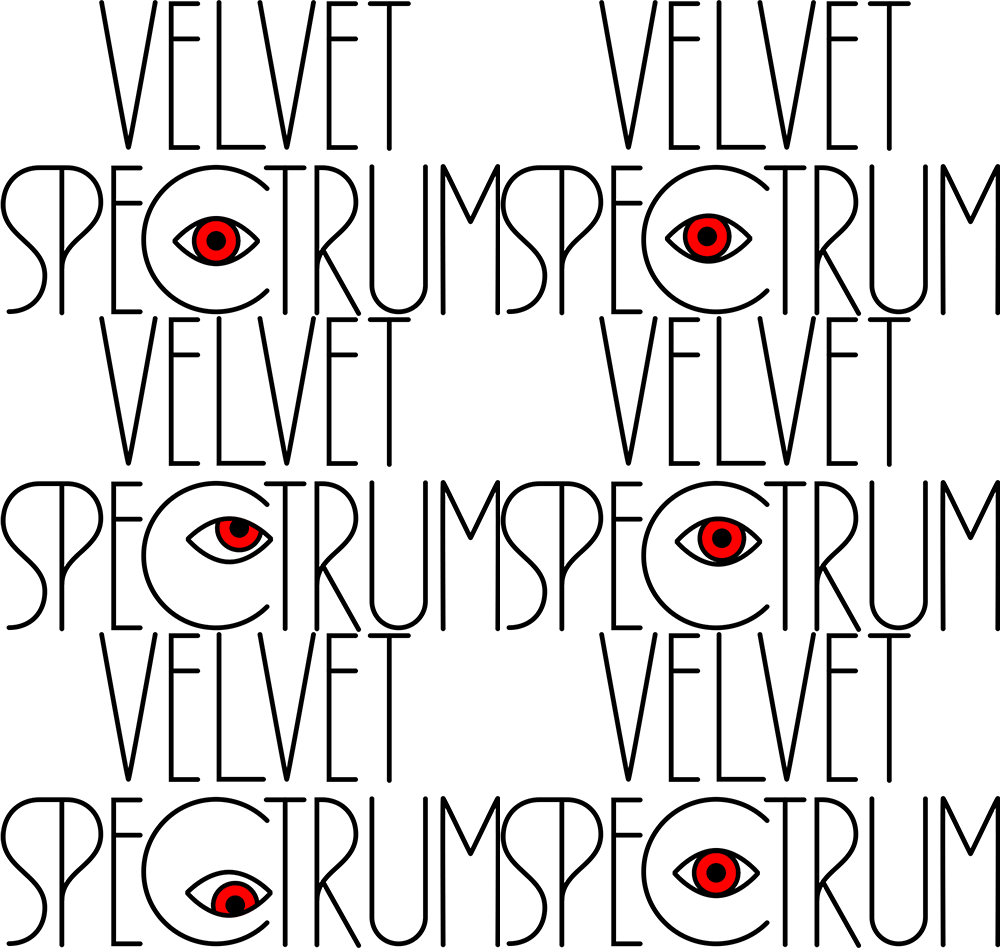

Why I Love Typography

As I prepare to lead my first lab session at Adobe MAX this October, focused on mastering eclectic typographic design, I’ve been thinking a lot about why typography remains such a driving force in my creative process and how I might help others see it as something more than a graphic design element. For me, typography has always been the starting point for exploration. It’s a place where I test ideas, challenge my habits, and find that delicate balance between order and chaos.

Where the Exploration Starts
Legibility is the foundation, sure, but once that’s covered, type transforms into an open canvas. I like to start with a loose idea, sometimes just a feeling or a rhythm, and see where it leads. I’ll push and pull letterforms, build textures, and play with balance or contrast. Often, the process feels more malleable than rigid, and setting out with no destination is when things get exciting.
One of my favorite breakthroughs came from something as simple as the Smudge brush in Photoshop. I hadn’t used it in years, and one day I decided to give it another shot, to see what might happen. A single test sparked the thought: “Maybe this could work as type.” That small experiment turned into a whole series of typographic pieces that quickly caught fire on Instagram and led to a number of commissions.
More importantly, it taught me a crucial lesson: you can’t remain static in your development. Creative growth happens when you step outside your usual habits and see familiar tools with fresh eyes. That moment pushed me to keep looking for new techniques and styles to evolve my work.

When Type Becomes Everything Else
What’s most fascinating is how these typographic experiments spill into other areas of my process. The techniques I’ve developed through type have shaped my approach to abstract textural studies, character design, and even product branding. I’ve been lucky to see this type-driven work live in many forms - advertising campaigns, logos, book covers, packaging designs, augmented reality experiences, and more. Whether the project is for a global brand or an indie startup, the foundation often begins with type as the creative foundation.
It’s less about what the letters say and more about how they feel. A single character can convey energy, tone, and personality.

A Mindset, Not Just a Medium
Typography, to me, is not just a design discipline; it’s a creative mindset. It’s where I test boundaries, play with balance and contrast, and refine my instincts for composition and storytelling. Even in projects that don’t involve type at all, the lessons I’ve learned from working with letterforms continue to shape my approach.
That’s the part I’m excited to share at Adobe MAX: how typography can be more than just a layer of design. It can be a springboard, a way to find your visual voice, experiment with new ideas, and build a foundation that translates into every creative challenge you take on.
The Ongoing Practice
Looking back, moments like that simple smudge brush test remind me that growth rarely comes from staying comfortable. It comes from being curious. From picking up tools you haven’t touched in years, to following instincts that don’t have a clear endpoint.
The styles I’ve developed, the projects I’ve been fortunate to work on, they all stem from that willingness to explore, to test, and to evolve.
I look at each artwork as an iteration - part of a much larger body of work that, over time, reflects a lifetime of dedication to honing my skills. Every piece, whether it succeeds or falls flat, becomes part of the story. A record of risks taken, lessons learned, and progress made.
That’s what keeps me showing up to the process. That’s what I hope to share at MAX. Typography isn’t just about letters; it’s about shaping a voice, one experiment at a time.


Comments